

Six HubSpot Pipeline Stages Beat Twelve Reps Ignore

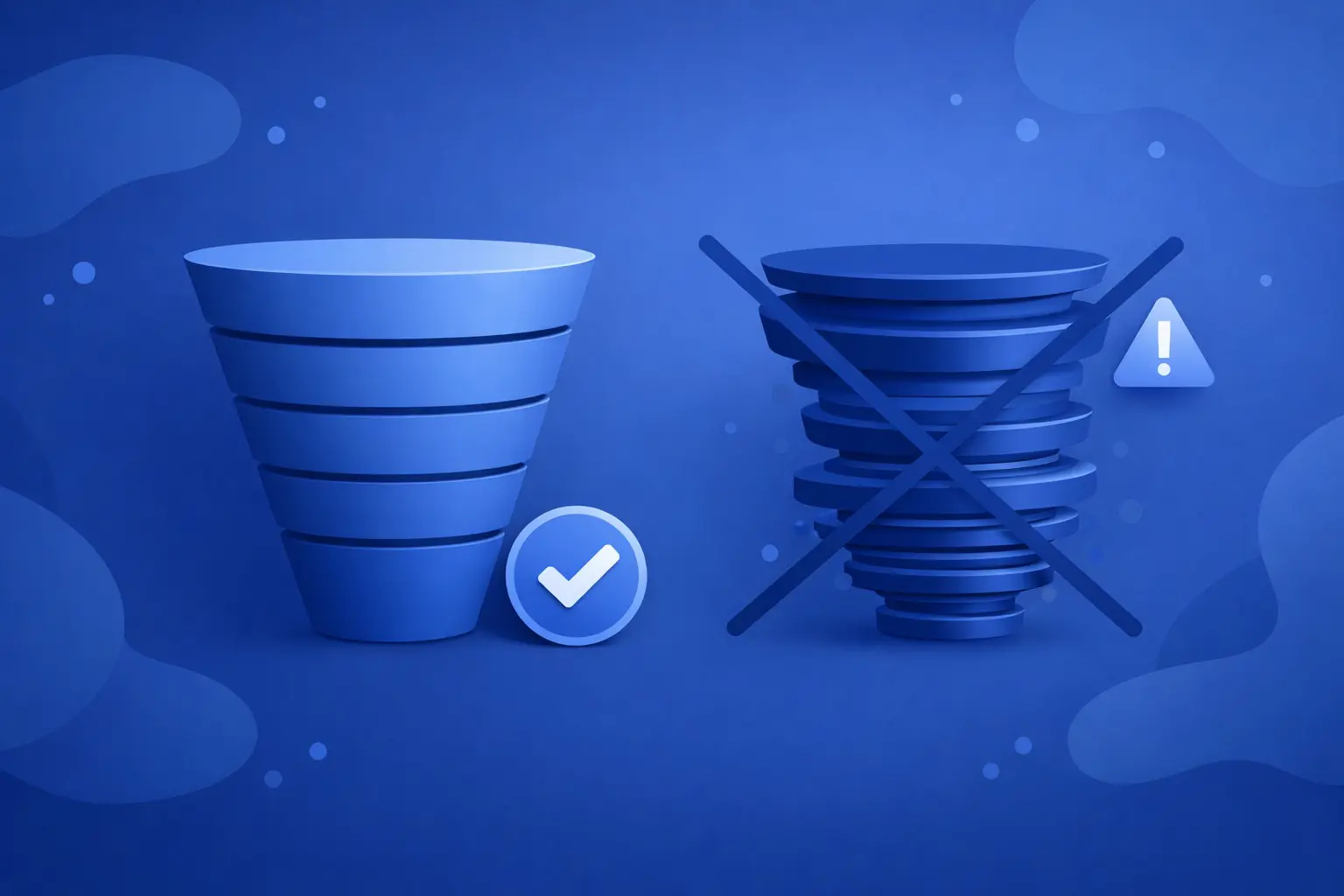
Most pipelines have too many stages.
Not because founders are careless. Because every consultant said the same thing: map your entire sales process, one stage per step, full visibility into every conversation.
It sounds right. It doesn't work.
And here's the rule we apply on every build: a deal only gets created when a qualified meeting is booked. Not when a lead responds. Not when someone fills a form. When a real conversation with a real prospect is on the calendar. That one change alone removes most of the noise.
Why Reps Skip Stages
When a pipeline has twelve stages, reps do one of two things.
They skip the ones that feel redundant. Or they drag deals through three stages in one sitting to close out a task.
Either way, your pipeline stops reflecting reality. Leadership looks at a board full of deals in "Proposal Sent" and thinks they have visibility. They don't.
The stages aren't wrong because your reps are lazy. They're wrong because the stages don't match the decisions your reps actually make.
Louise O'Grady at EvaluAgent described it plainly after we rebuilt their pipeline: the sales cycle dropped 30% and the team re-engaged with the process. Not because we added more stages. Because we removed the ones that created friction and defined the ones that remained.
Decisions vs Activities: The Distinction That Changes Everything
Here's the test for every stage in your pipeline.
Does this stage represent a decision or an activity?
Activities happen constantly. Demos get scheduled. Calls get logged. Emails go out. None of that means a deal is progressing.
A decision does. A decision means something real changed: the buyer confirmed budget, agreed to a next step, or said yes to a proposal.
When you build stages around decisions, reps understand why each one exists. They move deals because something changed, not because a task told them to.
Cut every activity stage. Keep every decision stage.
What Six Stages Looks Like
Here's a pipeline that works for most SaaS sales motions:
- Qualified Meeting Booked: A real conversation is scheduled with someone who fits your ICP.
- Discovery Complete: You understand the problem, timeline, and decision-maker.
- Proposal Sent: A specific scope and price is in front of the buyer.
- Verbal Commit: They said yes. Contract isn't signed yet.
- Contract Out: Paperwork is sent.
- Closed Won / Closed Lost
Six stages. Each one is a decision. Each one has a clear reason to exist.
What's missing: "Initial Outreach," "Follow-Up Sent," "Second Call Scheduled," "Demo Completed." Those are activities. They belong in your activity log, not your pipeline.
Exit Criteria Matter as Much as Stage Names
Naming your stages is the easy part.
Exit criteria are what make them stick.
Exit criteria answer one question: what has to be true before this deal moves to the next stage?
For "Discovery Complete" that might mean: budget confirmed, decision-maker identified, timeline established. All three. Not two out of three.
Write one sentence of exit criteria for each stage. If you can't write it in one sentence, the stage isn't defined clearly enough. Build those criteria into your HubSpot deal properties so reps see them on the record, not in a separate doc nobody reads.
When exit criteria are visible in HubSpot, managers stop asking "is this deal really at proposal stage?" The pipeline answers before anyone has to ask.
What to Do This Week
Pull up your current pipeline. Count the stages.
If you have more than seven, you have too many.
For each stage ask: decision or activity? Cut every activity stage. Keep every decision stage.
Then write one sentence of exit criteria for each stage you keep. Add them as a required field or a helper text note on the deal record in HubSpot.
Do that and your pipeline will tell you something real within a week.