

How to Choose the Right HubSpot Implementation Partner

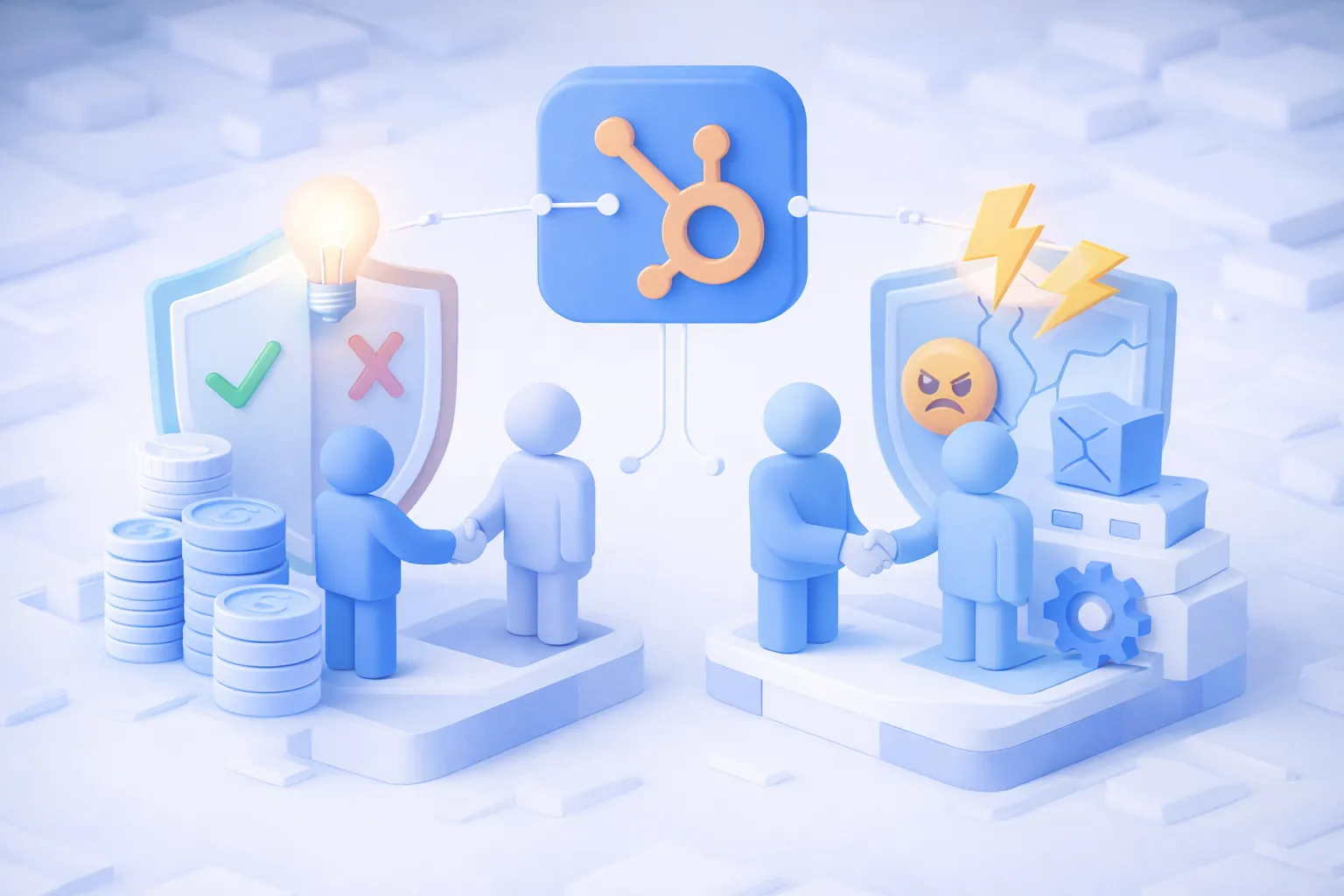
Choosing a HubSpot implementation partner is not just a vendor decision.
It's an operating decision.
The partner you choose will shape how your CRM works, how reliable your data is, and how easily your teams can execute.
Many HubSpot problems don't come from the platform.
They come from the wrong implementation partner.
Here's how to choose one that sets you up for long-term success.
What Makes a Great HubSpot Implementation Partner?
A great partner understands both the tool and the business behind it.
They don't just know HubSpot features.
They understand how sales, marketing, and customer success actually operate.
Strong partners focus on:
- CRM architecture and data design
- Sales process mapping
- Lifecycle stages and handoffs
- Automation that reduces manual work
- Reporting leadership can trust
A proper HubSpot implementation should reflect your real customer journey, not a generic template.
The best partners ask thoughtful questions before building anything.
They listen first.
They design second.
They also plan for the future.
That means building a system that supports growth, new pipelines, and evolving go-to-market motions, without constant rework.
Key Questions to Ask When Evaluating a Partner
The fastest way to spot a strong partner is by the questions they welcome.
You should ask how they approach implementation end to end.
Look for answers that include:
- Discovery and process mapping
- Data cleanup and migration
- Pipeline and lifecycle design
- Automation and routing logic
- Reporting and attribution
If migration is part of the scope, ask specifically how they handle CRM data transfers — a structured HubSpot migration service approach makes a significant difference in data quality at go-live.
You should also ask how they adapt their approach by industry or business model.
A good partner does not treat every company the same.
Other important questions:
- Who will be involved on both sides?
- What does the timeline realistically look like?
- How are decisions documented?
- What happens after go-live?
Partners offering structured HubSpot consulting services should clearly explain how they guide scope, sequencing, and tradeoffs.
If answers feel vague, that's a signal.
Red Flags to Watch Out For
Some warning signs show up early.
Pay attention to them.
Common red flags include:
- Jumping into workflows without discovery
- Reusing the same setup for every client
- Promising unrealistic timelines
- Avoiding questions about data structure
- No documentation or handoff plan
Another red flag is focusing only on setup, not adoption.
A CRM that teams don't trust or understand will not be used, no matter how clean it looks.
Be cautious of partners who rush.
HubSpot implementation requires decisions, alignment, and testing.
Skipping those steps usually leads to expensive fixes later.
Why Long-Term Thinking Matters
The goal is not just to "get HubSpot live."
The goal is to build a system that:
- Produces accurate data
- Supports consistent processes
- Scales as your business grows
- Enables automation over time
This is where strong HubSpot revenue operations thinking makes a difference.
Partners who understand RevOps build with visibility and efficiency in mind, not shortcuts.
Why Companies Choose ProfitPad
ProfitPad works with teams that want HubSpot to function as a growth system, not a bottleneck.
We don't rely on cookie-cutter configurations.
We design CRM architecture around how your business actually runs.
Our approach prioritizes:
- Clean, intentional data models
- Clear lifecycle definitions
- Automation that reduces friction
- Reporting that reflects reality
We support clients through implementation, onboarding, and ongoing optimization.
That ensures teams adopt the system and continue getting value long after launch.
Companies choose ProfitPad because we build foundations they can trust and scale with confidence.
Final Takeaway
The right HubSpot implementation partner does more than configure software.
They help you avoid technical debt, improve adoption, and build a system that supports growth.
Ask the right questions.
Watch for red flags.
Choose a partner who thinks beyond go-live.
Your CRM will reflect that decision for years.